




Can a fume hood be used for biological samples?
 Dec 12, 2025|
 Hey there! As a fume hood supplier, I often get asked whether a fume hood can be used for biological samples. It's a valid question, and today, I'm gonna break it down for you.
First off, let's understand what a fume hood is. A fume hood is a ventilated enclosure in a laboratory. Its main job is to capture, contain, and exhaust hazardous fumes, vapors, and dusts generated during experiments. There are different types of fume hoods available on the market, like the Modular Fume Hood, the PP Acid-Resistant Fume Hood, and the Normal Fume Hood. Each type has its own features and is designed for specific applications.
Now, can these fume hoods be used for biological samples? Well, it depends.
The Basics of Biological Sample Handling
Biological samples, such as cell cultures, bacteria, viruses, and tissue samples, require special handling. They need to be protected from contamination, and at the same time, the laboratory personnel need to be protected from potential biohazards.
When working with biological samples, we usually talk about biosafety levels (BSL). There are four biosafety levels, from BSL-1 to BSL-4, with BSL-1 being the lowest risk and BSL-4 being the highest.
- BSL-1: This level involves working with organisms that pose a low risk to human health and the environment. Examples include non-pathogenic strains of E. coli. In a BSL-1 setting, basic laboratory practices are usually sufficient, and a fume hood might be used as long as it can provide a clean and well-ventilated environment.
- BSL-2: Here, the organisms can cause moderate harm to humans. This includes things like hepatitis B virus and Staphylococcus aureus. In a BSL-2 laboratory, more stringent safety measures are required, and a fume hood might not be the best option on its own.
- BSL-3: At this level, the organisms can cause serious diseases through inhalation. Examples are Mycobacterium tuberculosis. Specialized equipment and facilities are needed, and a regular fume hood is definitely not suitable.
- BSL-4: This is the highest level, dealing with extremely dangerous and exotic pathogens like Ebola virus. Only highly specialized laboratories with strict safety protocols can handle these samples, and a fume hood is out of the question.
Using Fume Hoods for Biological Samples
Advantages
- Ventilation: Fume hoods provide good ventilation, which can help remove any potentially harmful aerosols or vapors generated during the handling of biological samples. For example, if you're working with chemicals that are used in the processing of biological samples, the fume hood can prevent these chemicals from spreading in the laboratory.
- Containment: They can also act as a physical barrier to contain spills and splashes. This is important for protecting the laboratory personnel from direct contact with the biological samples.
Limitations
- Lack of Sterility: One of the biggest drawbacks of using a fume hood for biological samples is the lack of sterility. Fume hoods are not designed to maintain a sterile environment. In contrast, biosafety cabinets are specifically designed to provide a sterile workspace for biological sample handling.
- Inadequate Protection from Biohazards: A fume hood might not provide sufficient protection against biohazards, especially at higher biosafety levels. Biosafety cabinets have additional features, such as HEPA filters, to remove airborne particles and microorganisms, which a fume hood may not have.
When a Fume Hood Can Be Used
In some cases, a fume hood can be used for biological samples, especially in a BSL-1 setting or when working with non-infectious biological materials. For example, if you're simply weighing or preparing reagents for a biological experiment, and there's no risk of generating aerosols or spreading biohazards, a fume hood can be a suitable option.
Let's say you're working on a project where you need to dissolve some biological dyes in a solvent. The fume hood can help remove the fumes from the solvent, and as long as the dyes are not infectious, it can be a safe and practical choice.
When to Choose a Biosafety Cabinet Instead
- Working with Infectious Agents: If you're working with any kind of infectious biological agent, a biosafety cabinet is a must. It provides a higher level of protection for both the samples and the laboratory personnel.
- Need for Sterility: When sterility is crucial, such as in cell culture work, a biosafety cabinet is the better option. It can maintain a clean and sterile environment, which is essential for the growth and survival of cells.
Our Fume Hoods and Their Suitability
As a fume hood supplier, we offer a range of fume hoods, each with its own characteristics.
The Modular Fume Hood is highly customizable. It can be adjusted to meet different laboratory requirements. If you're working in a BSL-1 laboratory and need a flexible ventilation solution, this fume hood could be a good fit.
The PP Acid-Resistant Fume Hood is designed to handle acidic fumes. If your biological sample handling involves the use of acidic chemicals, this fume hood can provide the necessary protection.

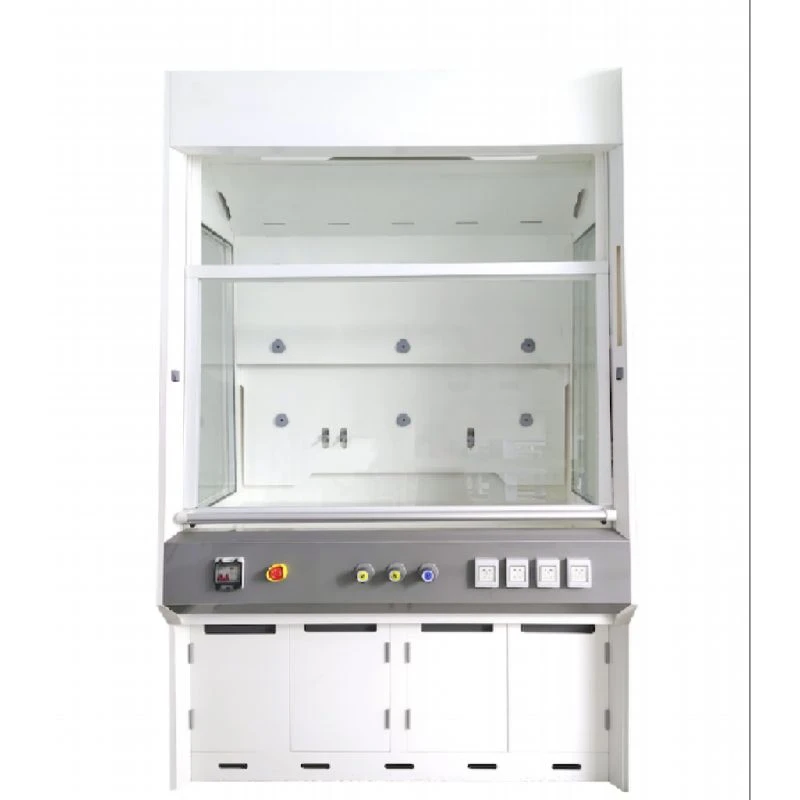
The Normal Fume Hood is a basic option that provides reliable ventilation. It can be used for general laboratory work, including some low-risk biological sample handling.
Conclusion
So, can a fume hood be used for biological samples? The answer is yes, but with limitations. It can be used in certain situations, especially in low-risk settings. However, for high-risk biological samples or when sterility is crucial, a biosafety cabinet is the better choice.
If you're still unsure about which type of equipment is right for your laboratory, don't hesitate to reach out. We're here to help you make the best decision for your specific needs. Whether you need a fume hood or a biosafety cabinet, we can provide you with the information and products you need. Contact us to start a procurement discussion and find the perfect solution for your laboratory.
References
- Centers for Disease Control and Prevention (CDC). Biosafety in Microbiological and Biomedical Laboratories (BMBL).
- World Health Organization (WHO). Laboratory Biosafety Manual.