




What is the adaptability of storage equipment to different floor surfaces?
 Nov 09, 2026|
Hey everyone, it’s Sam from AB’s storage equipment team – and today I wanna talk about something that doesn’t always get a lot of attention but makes a huge difference when setting up any storage space: how well your storage gear plays with different floor surfaces. Most folks fixate on shelf capacity, lock systems, or material safety, but if your equipment won’t sit right on your floor, you’re gonna have headaches down the line – think wobbling, wear and tear, even safety risks for whatever you’re storing. I’ve seen this first-hand over the years working with labs, research facilities, manufacturing plants, and museums, so let’s break this down like we’re hanging out at a job site, no boring jargon required.
First off, let’s get real about what “adaptability to floor surfaces” actually means here. It’s not just about whether a cabinet doesn’t tip over – it’s about how the base interacts with different floor types, from smooth concrete and epoxy to tile, wood, even slightly uneven or textured surfaces. The right storage gear needs to balance grip, stability, and adjustability, no matter if you’re placing it in a ultra-clean lab, a messy factory floor, or a dusty museum storage closet. Over the years, we’ve tailored our designs across all our product lines to handle these variations, and that starts with the base we build every piece on.
Let’s start with the most common surface you’ll run into: smooth indoor floors like concrete, epoxy, or polished tile. These are flat, hard, and easy to clean, so storage equipment can get away with base designs that focus more on stability than grip. For example, our Ductless Filtered Chemical Storage Cabinet has a low-profile, wide steel base with non-slip rubber feet that distribute weight evenly across the floor – no sharp edges that scratch epoxy, and enough friction to stop it from sliding when you pull heavy chemical containers in and out. Wait, but what about if those smooth floors get wet? A lot of labs have spill risks, so the rubber feet on these cabinets are also water-resistant, so they don’t slip if there’s a small leak or cleaning solution on the floor. We tested these in a university chemistry lab last year where they mopped twice a day, and not a single cabinet shifted during the six-month trial.
Another one that works great on smooth floors is our Nitrogen Cabinet, used for storing sensitive samples like biological materials or electronics that need low humidity. These have a slightly smaller footprint than chemical cabinets, so we added adjustable leveling feet instead of fixed rubber ones. Why? Because even the flattest polished concrete has tiny imperfections, and if you don’t level it, the door might not seal right – which defeats the whole purpose of a nitrogen cabinet. The leveling feet are easy to turn with a wrench or even a screwdriver on-site, so you don’t need a pro to get it set up. We found that smooth floors are actually perfect for these because the nitrogen cabinet’s sealed base doesn’t have to fight for grip, so the leveling feet do their job without wearing down too fast.

Now let’s switch to a surface that’s trickier: wood flooring, like in museum storage rooms or small lab annexes. Wood can be prone to scuffs, especially with heavy metal storage gear, and it’s often slightly uneven depending on how it was installed. That’s where our Ductless Air Clean Storage Cabinet stands out – we redesigned the base for wood floors to have softer, polyurethane-coated feet instead of hard rubber. The polyurethane doesn’t scratch finished wood, and it has just enough grip to keep the cabinet stable, even if you’re opening it repeatedly and shifting the weight a little. Also, the leveling system on these is a bit finer-tuned than our chemical cabinets, so you can adjust for small wood floor gaps that would make a regular cabinet wobble. We recently delivered a set of these to a natural history museum that stores insect specimens, and they loved that it didn’t leave marks on their vintage oak floors – that’s a win-win for them.
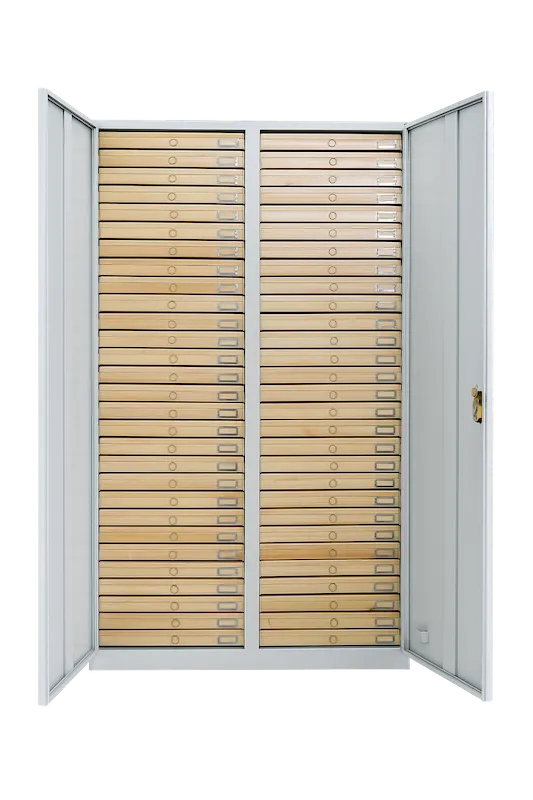
Speaking of insect specimens, our Insect Specimen Cabinet is a great example of adapting to a specific floor surface that’s common in museums: sometimes old wooden floors, sometimes slightly raised industrial shelving floors. These cabinets are on the lighter side compared to chemical storage gear, so we didn’t want to use heavy steel bases that would dent wood. Instead, they have low-profile nylon feet with a thin rubber pad that grips both smooth wood and the slightly textured linoleum some museums use for high-traffic areas. The best part? They’re stackable too, so if you have limited floor space, you can stack two, and the bottom cabinet’s feet still keep both stable – no sliding or tipping, even on a slightly uneven floor.
Now let’s get to the tough stuff: rough or uneven surfaces, like factory floors, outdoor mezzanines, or storage areas that haven’t been finished. Think concrete with a slight slope, or tile that’s unevenly grouted – standard storage equipment won’t work here, it’ll wobble, and the doors might not close right. That’s where our Strong Acid and Alkali Storage Cabinet comes in. These are built for the harshest environments, so their base is a reinforced steel frame with heavy-duty, adjustable leveling feet that can handle up to half an inch of unevenness in a single spot. We didn’t use rubber or polyurethane here – these feet are made of durable steel with a protective coating that won’t wear down on rough concrete, and you can crank them up or down with a hand tool to level the cabinet perfectly, even if the floor is sloped a little. Last year, we delivered a batch of these to a chemical manufacturing plant where the back storage floor had a ¼-inch slope from being worn down over years, and they were able to level all cabinets in less than an hour – way faster than any other brand they’d used before.
But wait, it’s not just about the base – there are other design choices that affect adaptability. For example, the total weight distribution of the cabinet is key. If a cabinet has all the weight at the top, it’ll tip over easier on an uneven floor, no matter how good the feet are. That’s why all our storage equipment has a wide base-to-height ratio – we shoot for a base that’s at least 60% of the cabinet’s height, so even if it’s on a slightly uneven surface, the center of gravity stays low. We also add optional anti-tip kits for all our heavy storage gear, especially if it’s going on raised floors or areas with heavy foot traffic that could bump into it. That’s a small extra step, but it’s made a huge difference for customers who have limited space or kids wandering around (yes, we sell to schools too, not just labs and museums).
I should also mention what to avoid when picking storage equipment for different floors. For example, don’t buy a cabinet with hard steel feet for a finished wood floor – it’ll scratch it, and if you have to move it later, it’ll leave gouges. On the flip side, don’t get a cabinet with soft rubber feet for a rough concrete floor – they’ll wear out in months, and the cabinet will start slipping. That’s why we always ask customers about their floor surface first when they reach out – it’s not a sales pitch, it’s just common sense. We want their storage equipment to last, not have to replace it in a year because it’s not right for their space.
Another thing we’ve learned over time: some customers have mixed floor surfaces. Maybe their main lab has epoxy, and the storage room has tile, or part of the floor is concrete and part is wood. Our modular base designs let you swap out feet easily – you can buy polyurethane feet for wood, steel feet for concrete, and just swap them out if you rearrange your space. That’s a huge plus, because you don’t have to buy an entirely new cabinet if you change floors down the line. We even do custom base adjustments for really unique floor surfaces, like textured stone or outdoor decking, if a customer needs it – just reach out and we can work with you.
Let’s circle back to real-world examples because I know that’s what matters. Last quarter, a biotech startup came to us with a problem: they had a lab on the second floor with polished concrete, and a storage closet upstairs with old wooden planks. They needed cabinets to store sensitive cell samples, so they looked at our nitrogen cabinets. We recommended the standard nitrogen cabinet with adjustable leveling feet for the concrete lab, and swapped out the feet to polyurethane-coated ones for the wood storage closet. No scratches, no wobbling, and when they rearranged their lab a month later, they swapped the feet back to rubber for the new epoxy area – all without buying new cabinets. That’s exactly the adaptability we aim for.
Another story: a manufacturing plant that had a storage area with slightly sloped concrete. They tried a competitor’s strong acid and alkali cabinets, and after a week, they were wobbling so bad the doors wouldn’t close. They switched to our cabinets, and within an hour, they had all 12 cabinets leveled properly. The customer service rep there told us that’s the difference between equipment that’s built for one space and equipment built to adapt to whatever space you have.
At the end of the day, storage equipment’s adaptability to floor surfaces isn’t just a feature – it’s a safety thing. If a chemical cabinet is wobbly on an uneven floor, that’s a spill waiting to happen. If a nitrogen cabinet isn’t level, your samples could get ruined. If a specimen cabinet scratches a museum’s floor, that’s a damage cost you didn’t plan for. We don’t cut corners on this because we know our customers rely on this gear to protect their stuff, their teams, and their spaces.
If you’re in the market for storage equipment and you’re not sure if it’s going to work with your floor surface, don’t guess. Reach out – we can walk you through our product lines, talk about base designs, and even help you figure out the right setup for your space. Whether you need a chemical cabinet for a smooth lab floor, a specimen cabinet for old wood, or a strong acid cabinet for rough concrete, we’ve got options that adapt to whatever you’re working with. No matter your floor, we’ve got your back.
Now, as promised, if you’re ready to talk specifics for your space, feel free to connect with our team to start the conversation about finding the right adaptable storage equipment for you.
References
- Occupational Safety and Health Administration (OSHA). (2022). "Guidelines for Chemical Storage Equipment and Floor Stability." U.S. Department of Labor.
- American National Standards Institute (ANSI). (2021). "Standard for Storage Cabinet Design and Environmental Adaptability." ANSI/BHMA A156.10.
- International Organization for Standardization (ISO). (2020). "Storage Equipment Stability Testing for Uneven Surfaces." ISO 14616:2020.
- Museum Store Association (MSA). (2023). "Best Practices for Storage Equipment in Historic Wood Flooring Spaces." MSA Technical Bulletin 07-23.