Personnel Safety
Biosafety cabinets provide a contained and controlled environment, preventing researchers from exposure to hazardous agents, thus safeguarding their health.
Sample Protection
Biosafety cabinets maintain sterile conditions, minimizing the risk of cross-contamination and preserving the integrity of valuable samples.
Risk Mitigation
Biosafety cabinets mitigate the potential for laboratory-acquired infections and accidents, fostering a secure workspace.
Reduced Downtime
Reliable cabinets reduce downtime due to equipment malfunction or contamination concerns, contributing to seamless research operations.
Scientific Integrity
Using biosafety cabinets upholds the credibility of research outcomes by minimizing external influences and errors caused by contamination.
Flexibility and Versatility
Biosafety cabinets are available in different classes and configurations to suit various laboratory needs. Whether handling microbiological research, cell culture work, or pharmaceutical compounding, there’s a suitable biosafety cabinet designed to meet specific requirements.


Microbiological Research
Biosafety cabinets are extensively used in microbiological research to handle pathogens, bacteria, viruses, and fungi. As primary barriers, they provide a controlled environment that prevents contamination of samples and protects researchers from exposure to potentially harmful microorganisms.
Pharmacy Compounding
In healthcare system pharmacies, bioSafety cabinets are indispensable for compounding sterile medications, particularly in the preparation of injectable drugs. As Containment Primary Engineering Controls (C-PECs), they ensure that Compounded Sterile Preparations (CSPs) are free from microbial contamination, which is critical for patient safety.
Clinical and Diagnostic Laboratories
Clinical laboratories use bioSafety cabinet to handle patient samples, especially those that may contain infectious agents. This is essential for diagnostic testing and research involving human pathogens.
Biotechnology and Genetic Engineering
In biotechnology and genetic engineering labs, bioSafety cabinet provide a sterile environment for manipulating DNA, RNA, and other biological materials.
Vaccine Development and Production
BioSafety cabinet play a crucial role in the development and production of vaccines. They ensure that external agents do not contaminate the vaccine cultures and that the personnel are protected from exposure to the pathogens used in vaccine production.
Environmental Testing
Biosafety Cabinets are used in environmental testing laboratories to analyze soil, water, and air samples for microbial contamination. They help prevent cross-contamination between samples and protect laboratory workers from exposure to hazardous substances.
Tissue Culture and Cell Biology
In cell biology and tissue culture laboratories, bioSafety cabinet provide a sterile environment necessary for growing and maintaining cell lines.
Use in the Animal Laboratory
Biosafety cabinets designed for the vivarium offer specific design features such as pre-filters that capture animal hair and dander to extend filter life, larger work access openings to fit mouse and rat cages, and a smooth work surface not dished to accommodate the ease of moving cages in and out of the work zone. Cabinets are used for cage changing or procedural work providing ISO Class 5 air.

Class I BSC
Class I cabinets provide personnel and environmental protection by filtering air through a HEPA filter before it is exhausted. These cabinets do not protect the product within from potential contamination and are suitable for general manipulations of low-to-moderate risk agents where product sterility is not a priority.
Class II BSCs
Class II cabinets are designed to protect the product, personnel, and environment, making them ideal for handling microbiological and biotechnological materials with a requirement for aseptic conditions.
Type A1 BSCs
Often used in clinical and research laboratories for standard microbiological work with no chemical evaporation. Type A1 cabinets maintain a minimum inflow velocity of 75 feet per minute and recirculate 70% of the air while exhausting 30% outdoors after filtration. They are not suitable for handling volatile or toxic chemicals.
Type A2 BSCs
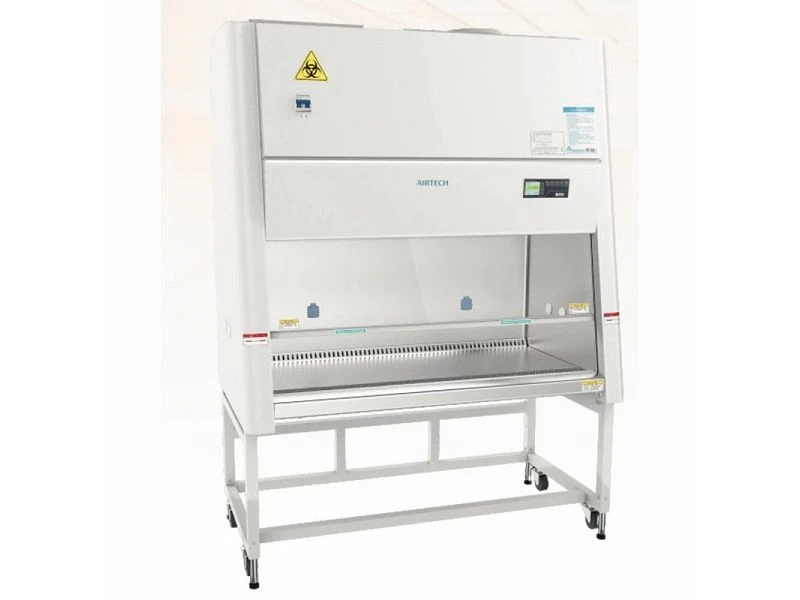
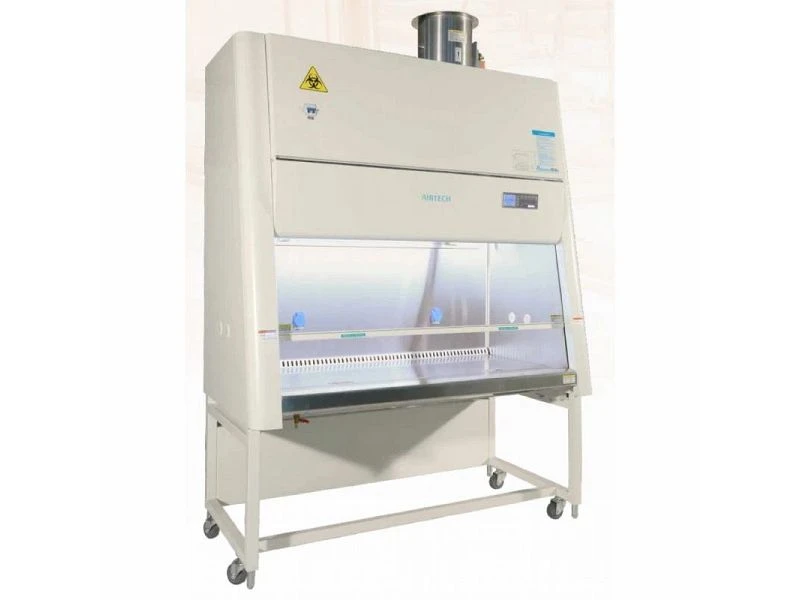
Similar to Type A1 but with increased inflow velocity of 100 feet per minute, enhancing containment. Type A2 cabinets can handle minute amounts of volatile chemicals if vented with an appropriate thimble (canopy) connection to the facility’s HVAC system. This type is prevalent in pharmaceutical compounding and biotechnology sectors.
Type B1 BSCs
Designed for work involving minute quantities of toxic chemicals and radionuclides as long as these operations occur toward the rear of the work area, directly exhausted outside. Type B1 maintains a balance where 70% of air is exhausted and 30% is recirculated, both through HEPA filters.
Type B2 BSCs
Also known as Total Exhaust Cabinets, these are suitable for handling significant quantities of toxic chemicals and radionuclides. They maintain a minimum inflow of 100 feet per minute and exhaust 100% of the air. All inflow and downflow air is ducted out of the building, providing no recirculation within the cabinet.
Type C1 BSCs
A versatile cabinet that functions under both Type A and Type B conditions with a switch to change between modes depending on the chemicals used. This type provides flexibility in laboratories that handle both biological samples and chemicals, adjusting the exhaust accordingly.
Class III BSCs
Offering the highest level of protection, Class III cabinets are gas-tight enclosures used with high-risk microbiological agents and hazardous chemicals. They operate under negative pressure, and materials are manipulated through attached gloves.

|
Model |
BSC-1004 A2 |
BSC-1004 B2 |
||
|
Filter Efficiency |
≥99.9995%, @0.12 μm |
|||
|
Supply & Exhaust Filters |
ULPA filters |
|||
|
Cleanliness Level |
ISO 4 |
|||
|
Standards |
YY0569-2011 (GB 4793.1-2007, GB/T 18268.1-2010) |
|||
|
Downward Airflow Speed |
0.35 m/s |
|||
|
Inflow Air Speed |
0.55 m/s |
|||
|
Noise Level |
58-65 dB(A) |
|||
|
Vibration (Center) |
≤5 μm |
|||
|
Voltage |
AC220V, 1Ф, 50Hz |
|||
|
Sash Opening Height |
200mm |
|||
|
Biological Protection |
Personnel Protection |
Bacterial count ≤10 CFU/test (impact sampler) Bacterial count ≤5 CFU/test (slit sampler) |
||
|
Product Protection |
Bacterial count ≤5 CFU/test |
|||
|
Cross-contamination Protection |
Bacterial count ≤2 CFU/test |
|||
|
Max Power (with Socket) |
1.65 kVA |
1.65 kVA |
||
|
Rated Power (no Socket) |
0.33 kVA |
0.33 kVA |
||
|
Net Weight |
260 kg |
270 kg |
||
|
Internal Dimensions (W×D×H) |
1004*630*630 mm |
1004*630*630 mm |
||
|
External Dimensions (W×D×H) |
1200*795*2050 mm |
1200*795*2050 mm |
||
|
Illumination Lamp Power |
24.5 W |
24.5 W |
||
|
UV Lamp Power |
20 W |
20 W |
||
|
Illumination |
≥ 900 Lx |
|||
|
Structure Material |
External Structure |
High-quality cold-rolled steel with ivory-white electrostatic powder coating |
||
|
Working Area Structure |
One-piece 304 stainless steel |
|||
|
Exhaust Direction |
Top exhaust |
|||
Don't spray corrosive disinfectants
Use a squirt or drizzle bottle to apply disinfectants such as bleach. Follow with an ethanol rinse to prevent corrosion and damage to the bsc's internal parts.


Don't block the grills or clutter the biosafety cabinet
Blocking the front or back perforated grill and cluttering your work surface negatively affects airflow and containment of aerosols.
Don't raise the sash
Biosafety cabinets are designed to operate at a fixed sash height (this is very different from a chemical fume hood).


Don't use bunsen burners inside the biosafety cabinet
They create unnecessary fire hazards, explosion hazards (if there is a gas connection), and air turbulence.
Don't rely on UV
UV light only works on surfaces, not what's underneath. Dust and other materials condense on the bulb, and the germicidal functions burn out long before the blue light does. The bulb should be dusted weekly and should be changed annually. UV can be a supplemental treatment, but good chemical disinfection is much more reliable.


Don't use volatile or flammable chemicals
Biosafety cabinets are not designed to filter or contain chemicals so that they will recirculate back into the room. You and your colleagues May breathe them in when they recirculate into the room. Volatile or flammable chemicals May cause an explosion upon contact with electrical parts by becoming concentrated inside the bsc.

As one of the leading biosafety cabinet manufacturers in China, we warmly welcome you to buy discount biosafety cabinet in stock here from our factory. All customized products are with high quality and low price.
Laminar flow biosafety cabinet, BioSafety Cabinet Class II B2, Medical Grade Biological Safety Cabinet with Real Time Filter Monitoring