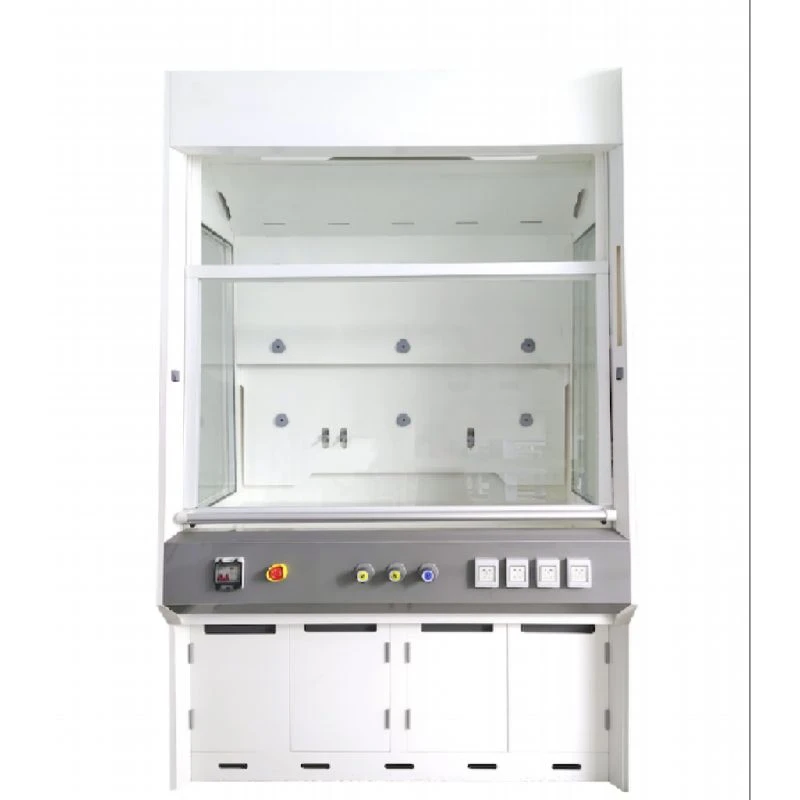
Fume Hood

Biensi:Your Professional Fume Hood manufacturer!


Established in 2014, Biensi is a technological enterprise that integrates research, production, and sales. Biensi specializes in the production and sales of a wide range of laboratory equipment, including:Clean Air Fume Hoods, Weighing Safety Covers, High-Activity Isolation Cabinets, Reagent Terminal Management Systems, Clean Air Medicine Cabinets, Smart Medicine Cabinets, Intelligent Clean Air Hazardous Chemical Cabinets, Clean Air Hazardous Chemical Cabinets, Smart Hazardous Chemical Cabinets, Pathology Refrigerators, PP Clean Air Medicine Cabinets, Fireproof Clean Air Medicine Cabinets, Flammable and Toxic Substance Storage Cabinets, Chemical Safety Cabinets, Strong Acid and Alkali Storage Cabinets, Cylinder Safety Cabinets, Small Laboratory Waste Temporary Storage Cabinets, Laboratory Workbenches, Fume Hoods, Fans, Water Accessories.Our extensive product line is designed to meet the diverse needs of laboratories, ensuring safety, efficiency, and reliability.


Why Choose Us
 

Product Application
Our products are widely used in: chemical industry, petrochemical industry, inspection and quarantine, pharmaceutical industry, hospitals and CDC, research institutes, judiciary, colleges and universities and other industries, with excellent quality.


Our Service
Whether it's a technical issue during equipment use or maintenance needs in the future, we provide timely technical support to ensure your laboratory equipment is always in optimal condition.


Production Market
In China, the Chinese Academy of Sciences, China Academy of Petroleum and Chemical Research Institute, the China Animal Hygiene and Epidemiology Research Center, Tsinghua University, Shanghai Jiao Tong University, Zhejiang University, and other nearly 6,000 high-quality customers to develop long-term cooperation.While steadily developing in the domestic market, the company began actively exploring overseas markets, establishing a stable international customer base.


Our Certificate
Biensi is committed to delivering high-quality, safe, and environmentally responsible products. We hold the following key certifications:
ISO 9001: Ensures top-tier quality management.
ISO 45001: Demonstrates our focus on occupational health and safety.
ISO 14001: Reflects our commitment to environmental sustainability.
CE Certification: Complies with European safety and environmental standards.
Additionally, Biensi holds multiple patents for our innovative laboratory equipment, reinforcing our role as a leader in technology and product development.


First 12 Last 1/2
Advantages Of Fume Hood


Enhanced safety
The primary cause of a fume hood is to guard laboratory personnel against breathing in toxic fumes, vapors, and particulates. High-super fume hoods are designed to successfully seize and exhaust those harmful substances, reducing the threat of respiration troubles and chemical exposure. By ensuring that air is continuously drawn away from the user is create a safer working environment.


Improved air quality
Fume hoods play an important role in retaining the most terrific air in the lab. They work by drawing air via a filtered system, which lets in to remove doubtlessly risky contaminants from the air. This way protects lab personnel and prevents cross-contamination of experiments and samples.


Increased efficiency
Modern fume hoods are ready with superior features that incorporate adjustable airflow controls and electricity-efficient designs. These enhancements assist in preserving consistent airflow and temperature, which could decorate the accuracy of experimental outcomes and reduce the probability of device malfunction.


Regulatory compliance
Compliance with safety regulations and requirements is essential for laboratory operations. High-first-rate laboratory fume hoods meet stringent employer standards, making sure that your lab adheres to safety and environmental pointers.


Application of Fume Hood
Ventilated Balance Enclosure
PP Acid-Resistant Laboratory Cabinet
Drawers Fume Hood
Normal Fume Hood

Chemical Handling and Analysis
In laboratories, fume hoods are often used for chemical handling and analysis. They provide a safe atmosphere in which to work with volatile, poisonous, or caustic substances. Fume hoods ensure that reagents, solvents, acids, bases, and other chemical compounds are handled safely. They make it easier to weigh, mix, dilute, and transfer chemicals, as well as conduct experiments and reactions that produce potentially dangerous gases or vapors.


Biological Safety
In biosafety applications, a fume hood with adequate filters or ventilation systems are used. Working with infectious materials, biological agents, or genetically modified organisms (GMOs) requires a controlled environment, which these hoods provide. They safeguard researchers from biological dangers and prevent diseases or pollutants from entering the laboratory environment.


Pharmaceuticals and Drug Development
A fume hood is essential in pharmaceutical research and development. They provide a secure and regulated environment for working with active pharmaceutical ingredients (APIs), powerful chemicals, and pharmaceutical formulations. Fume hoods are utilized in pharmaceutical procedures that include hazardous compounds, such as medication manufacturing, formulation development, quality control, and others.


Industrial Research and Development
Fume hoods are used in industrial research and development settings. They’re used in a variety of industries, including chemical manufacture, materials science, and product development. Fume hoods allow scientists to operate safely with dangerous materials, test samples, and conduct experiments. They help with tasks including product synthesis, quality assurance, chemical analysis, and process optimization.


Research Laboratories
Fume hoods are essential in all scientific disciplines’ research laboratories. They offer a flexible and adaptable workstation for a variety of research pursuits. Fume hoods are used in a variety of disciplines, including chemistry, biochemistry, molecular biology, environmental research, forensic science, and others. They provide a secure setting in which to conduct experiments, handle samples, and operate with hazardous substances.


Education and Training
In educational institutions, fume hoods are utilized for teaching and training. During laboratory experiments and demonstrations, they ensure the safety of students and teachers. Students can receive hands-on experience with chemicals and hazardous materials while adhering to safety rules when using fume hoods.


Technical Specifications


Worktop

Phenolic/Epoxy resin board/Ceramic/Stainless steel / Trespa

Colour

Grey,light gray,blue,yellow,black,white ect

Dimension

L*1500/750(W) *850 /900mm(H) or customizable

Structure

C-Frame/H-Frame/Floor Mounted

Base cabinet

Options: Acid-alkali cabinet, explosion-proof cabinet, mobile cabinet, waste liquid cabinet, solid waste cabinet, exhaust storage cabinet.

Adjustable Shelf

Adjustable shelf with maximum storage length

Safety Protection

Door height limiter, explosion-proof vent, leakage protection, emergency exhaust, emergency stop button, anti-pinch sash, sterilization system.

Faucet

Brass body with ceramic valve core

Sink

PP sink;ceramic sink; epoxy resin sink

Socket

Multi-functional /customized

Server type

OEM & ODM


Structure And Composition


1. Cabinet body

The cabinet of the fume hood is usually made of stainless steel, cold-rolled steel plate and other metal materials, which has good corrosion resistance and strength. The surface of the cabinet is specially treated, such as spraying, electroplating, etc., to improve its beauty and durability.

Cabinets usually have multiple partitions that can be used to house laboratory supplies and equipment. The height of the partition can be adjusted as needed to accommodate experimental items of different sizes.

2. Desktop

The ventilation counter surface is generally made of corrosion-resistant, heat-resistant and easy to clean materials, such as psychological board and epoxy resin board. The edge of the counter is usually fitted with a water stopper to prevent liquid from spilling over the cabinet.

3. Ventilation system

The ventilation system of the fume hood is mainly composed of fans, air ducts, filters, etc. The fan is the core component of the ventilation system, responsible for drawing laboratory air into the fume hood, filtering it through filters, and then discharging it outside.

Ventilation ducts usually use round or rectangular metal pipes to connect the fume hood to the fan. The design of the air duct should consider the smoothness of the air flow and minimize the resistance to improve the ventilation efficiency.

Filters are an important part of the ventilation system and are used to filter harmful gases, vapors, dust and other pollutants from the air.

4. Control system

Fume hood control systems usually include fan control, lighting control and airflow monitoring functions. Fan control can adjust the fan speed to meet the ventilation requirements under different experimental conditions. The lighting control can adjust the brightness of the lighting in the fume hood, which is convenient for experimental operation. Airflow monitoring can monitor the airflow speed and direction in the fume hood in real time to ensure the normal operation of the ventilation system.


Types of Fume Hood
 
PP Acid-Resistant Laboratory Cabinet
 

Ducted Fume Hoods

Industrial processes use mostly these Fume Hoods. A large variety exists. In most designs, conditioned (i.e. heated or cooled) air is drawn from the lab space into the fume hood and then dispersed via ducts into the outside atmosphere.


Distillation Fume Hood

It is distinct from others because of its low worktop height, which allows the operator to operate from a highly elevated position. This allows for the installation and mounting of tall distillation equipment in the work chamber. The remaining characteristics of this kind of hood and other typical fume hoods are similar.

Drawers Fume Hood
Normal Fume Hood
 

Ductless Fume Hoods

These generally have a fan mounted on the top (soffit) of the hood, or beneath the worktop. Air is sucked through the front opening of the hood and through a filter, before passing through the fan and being fed back into the workplace. With a ductless fume hood, it is essential that the filter medium be able to remove the particular hazardous or noxious material being used.


Acid Digestion Fume Hood

Special liners composed of materials such as unplasticized PVC are employed in such fume hoods because of their ability to withstand acid. For acid digestion applications that require high temperatures while being in service, it is possible to employ different types of materials such as PVDF instead. Because they are resistant to the etching caused by hydrofluoric acid, polycarbonate sashes are often used.

Ventilated Balance Enclosure


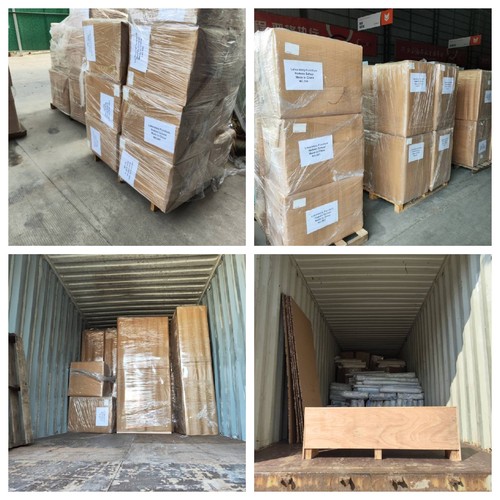
Packaging And Shipping


productcate-1-1


FAQ


Q: How about the package?

A: Bubble film + Cottom +Standard export wooden case or as your request.

Q: How to inspect the goods?

A: Products will checked by our QC staff frist, then our proejct manager. Client can come and check bythemselves or third party check is available.

Q: What's your delivery time ?

A: The goods will be deliveried wthin 7-15 working-days after recepit of the deposit .

Q: Why is preventative maintenance necessary?

A: Evaluate your fume hood regularly to ensure optimized functionality. Preventative maintenance is a must for the lab’s safety and its users. To avoid performance degradation and premature system failures. Periodically check the motors, exhaust fans, utilities, sash, and safety glass.

Q: What can a fume hood protect you from?

A: A fume hood is designed to protect the user and room occupants from exposure to vapors, aerosols, toxic materials, odorous, and other harmful substances. Fume hoods provide the best protection when the fume hood sash is in the closed position. All chemical fume hoods must be ducted to the outside of the building.

Q: How to use a fume hood correctly?

A: Safety glasses (goggles), lab coats, and appropriate chemical gloves must be worn when working in, on, or around the fume hood. Do not put your head in the hood, beyond the sash opening. Do not use the hood for storage of equipment, containers, or chemicals which are not going to be used during the day.

Q: How safe are fume hoods?

A: Fume hoods provide a safe, enclosed work area for chemical manipulations and provide critical ventilation for the user and laboratory. This ventilation is often the best engineering control available to keep chemical exposure below exposure limits.

Q: What is the life expectancy of a fume hood?

A: If your fume hood is older than ten years, it's time to replace it. It is critical to keep a laboratory up to date in terms of safety and technological advancements. New laboratory fume hoods are more effective than old ones, they efficiently reduce exposure to potentially dangerous vapors.

Q: How often do fume hoods need to be inspected?

A: According to the standards set forward by OSHA, chemical fume hood testing should be conducted on an annual basis at a minimum. Additionally, new fume hoods should be tested upon installation prior to utilization. It also is recommended that a reevaluation should be performed any time changes are made to the equipment.

Q: How far into the fume hood should work be when using a fume hood?

A: To prevent unnecessary exposure, keep all chemicals and fume-generating or vapor-generating equipment at least 6 inches behind the face of the hood. The yellow stripe on the bench surface or side wall is a helpful distance guide.

As one of the leading fume hood manufacturers in China, we warmly welcome you to buy discount fume hood in stock here from our factory. All customized products are with high quality and low price.

Ductless portable fume hood for easy mobility, Ductless Filtered Fume Hood, air science fume hood

(0/10)

clearall